
Unlock health and endurance first at a lantern. The Valor Mortis skill tree is all passive bonuses, so spend your first level-up points on staying alive and specialize in parries, melee or headshots later. Nothing is locked in: you can reset your points at a lantern.
How do Valor Mortis abilities work, and can you reset skill points?
Rest at a lantern to level up and distribute points into passive skills; you can also reset your allocation there by spending Catalysts.
The Level Up screen puts your skill nodes above your Amber slots. At the bottom, Detailed Statistics lists Maximum Health, Maximum Nephtoglobin, and Maximum Endurance. The Reset Level control is beside the increase and decrease controls.
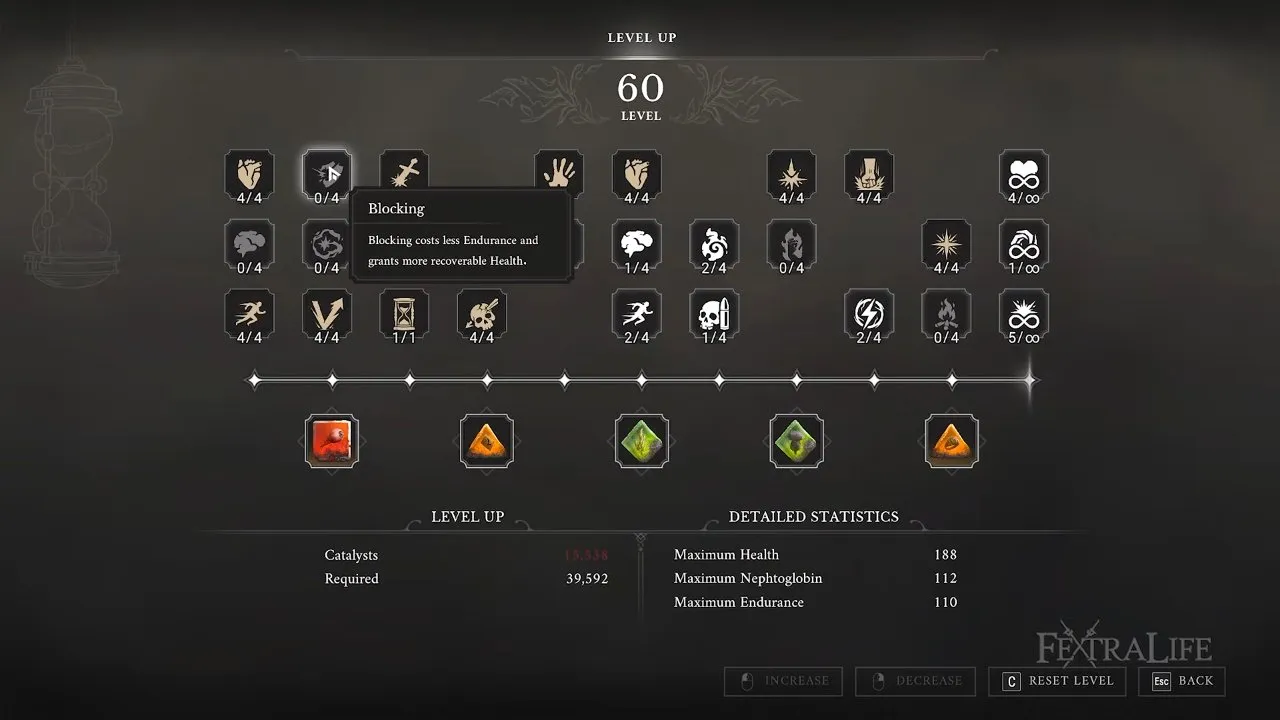
You can't put points everywhere. If you went into Nephtoglobin and keep running out of stamina, move those points to endurance. A reset costs Catalysts and gets pricier as you level, so fix a build that feels wrong sooner rather than later.
What are the best Valor Mortis skills to unlock first?
Prioritize maximum health and endurance, then add upgrades that support the attacks and defenses you actually use.
Health and endurance first: recommended
Health buys you room for mistakes; endurance lets you keep swinging and dodging. Players who've pushed through the early game put points into both before touching Nephtoglobin. Dying fast? Go health. Running out of stamina mid-fight? Go endurance.
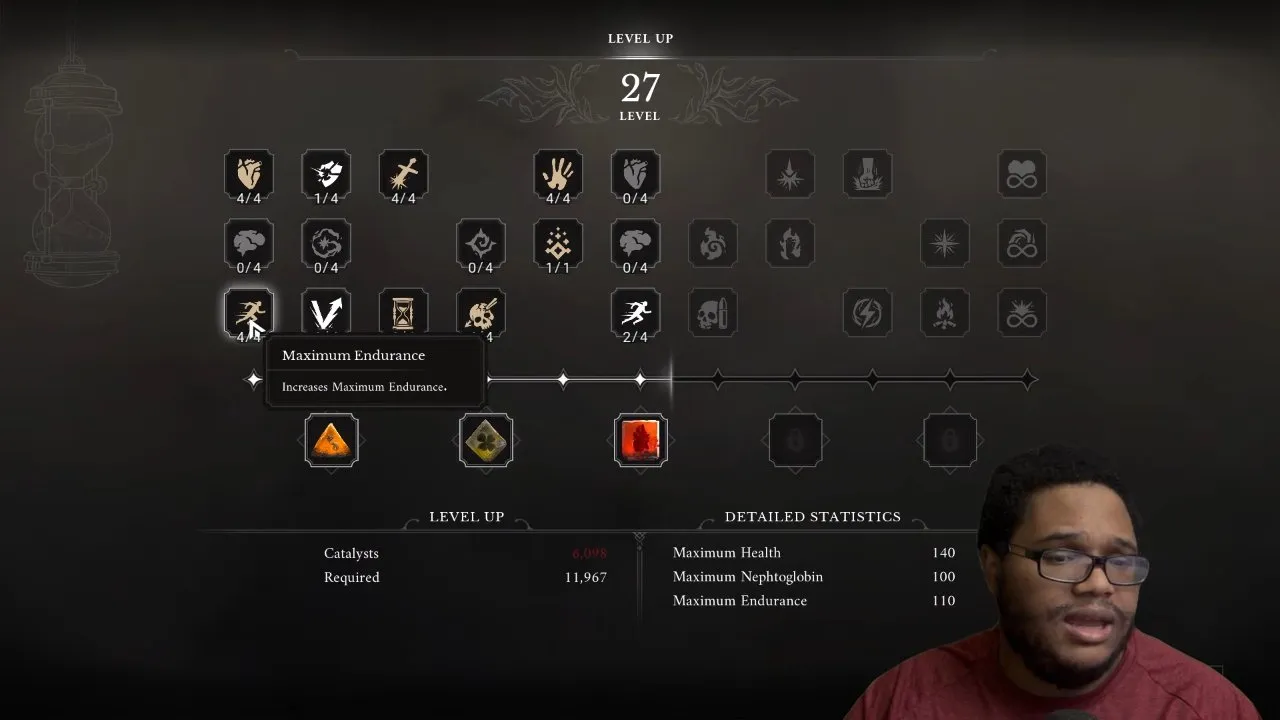
Select Maximum Endurance in the lower row. Its tooltip reads Increases Maximum Endurance, and the allocation counter sits under the running figure icon.
Maximum Nephtoglobin later
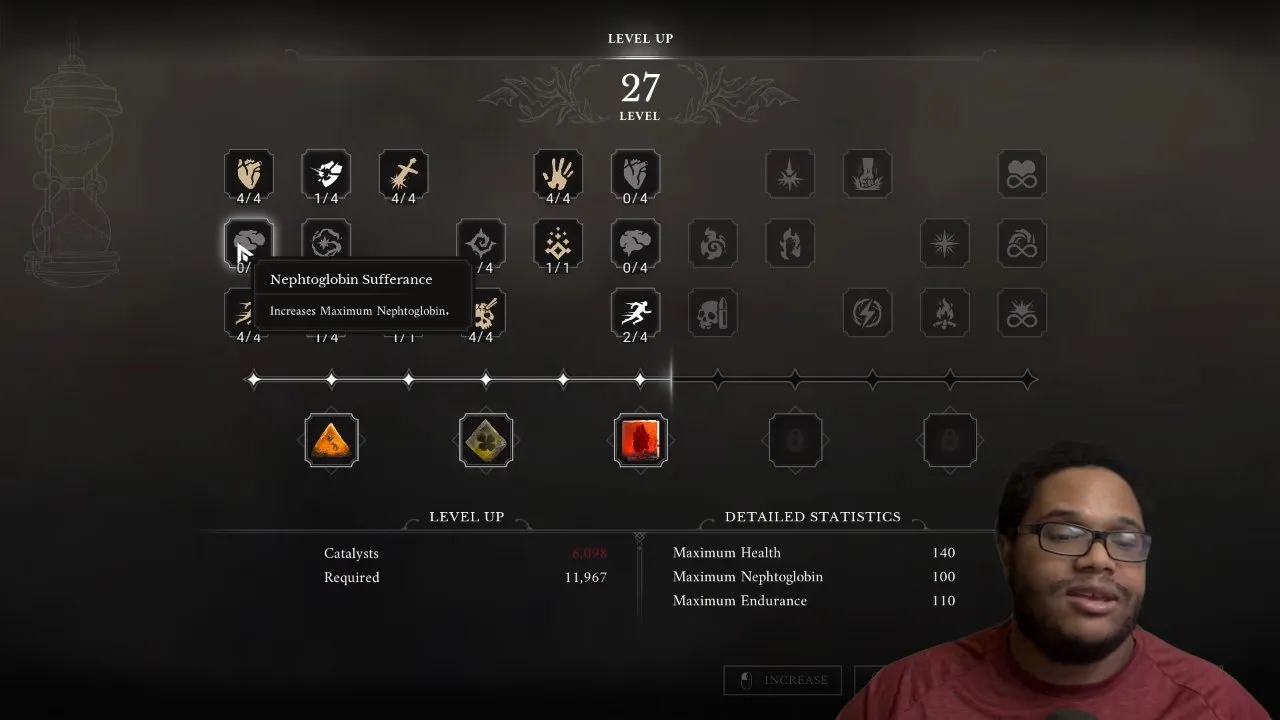
More Nephtoglobin means a bigger pool for transmutations, but early on you don't have many to spend it on. The node is called Nephtoglobin Sufferance, and it can wait.
Which Valor Mortis builds should you spend points on next?
After health and endurance, choose parry upgrades for a parry-focused build, melee damage for close combat, or Airborne Aiming and headshot damage for firearm use.
Parry or mixed defense
Parrying Impact makes successful parries deal more Posture damage. Players who live off parries put a lot of points here. If you block about as often as you parry, split your points between parrying and blocking instead.
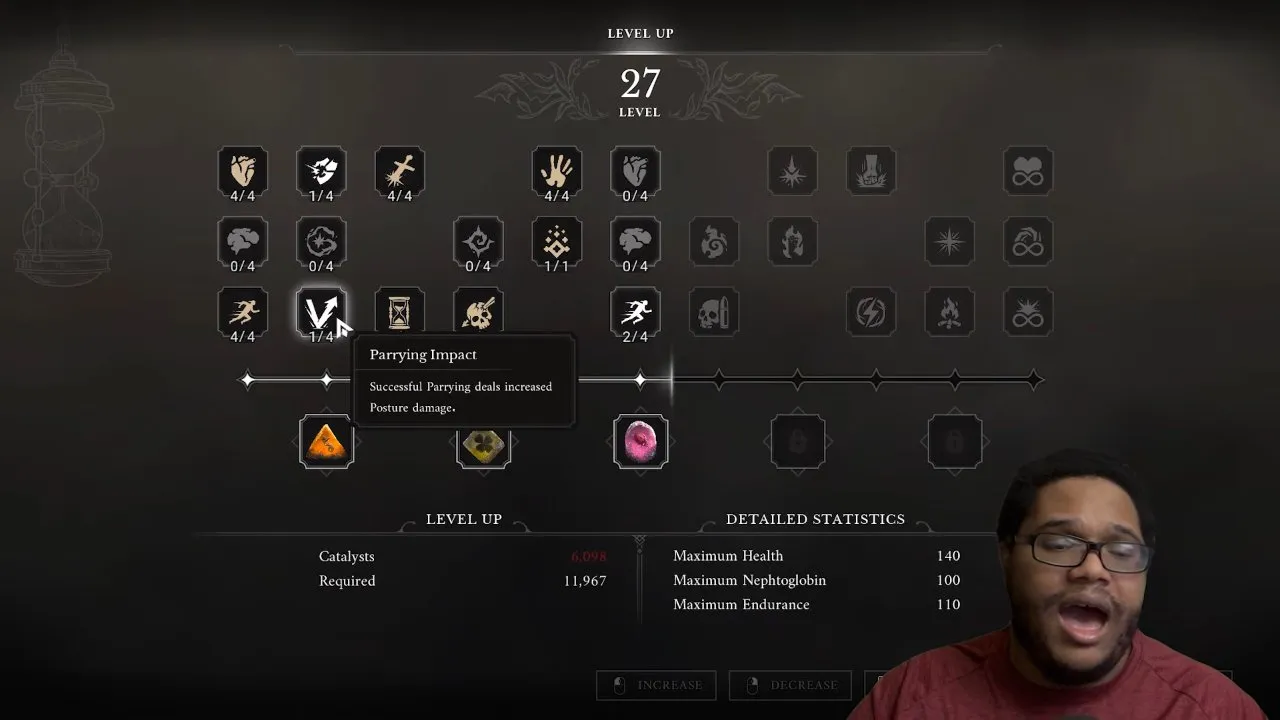
It only pays off when the parry lands, so if your timing is shaky, start with the parry timing guide.
Melee damage and endurance efficiency
Choose melee damage when close combat is your main way of dealing damage. Later, reducing melee endurance costs supports that same approach. Keep adding health or endurance if either remains your main problem instead of following a damage route at the expense of survival.
Firearms and airborne shots
Airborne Aiming slows time when you aim a firearm while in the air. It makes airborne shooting sections easier to handle; you can shoot without the slowdown, but the timing is less forgiving.
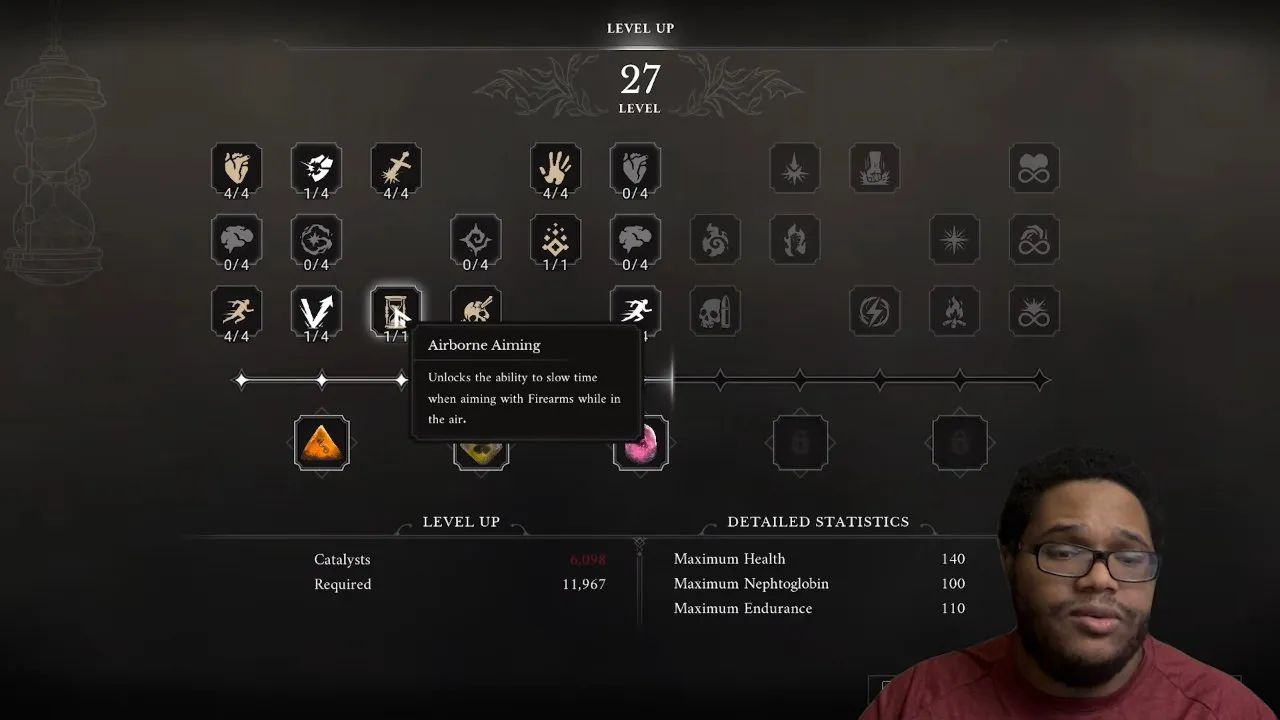
Add headshot damage if you use firearms regularly. Players favor it for dealing with elites at range rather than taking every fight into melee. If you don't have a firearm yet, here's where to get the pistol.
How does Transmuted Persistence restore gray health?
Equip Transmuted Persistence at a lantern, then damage enemies with transmutations to restore the recoverable gray portion of your health bar.
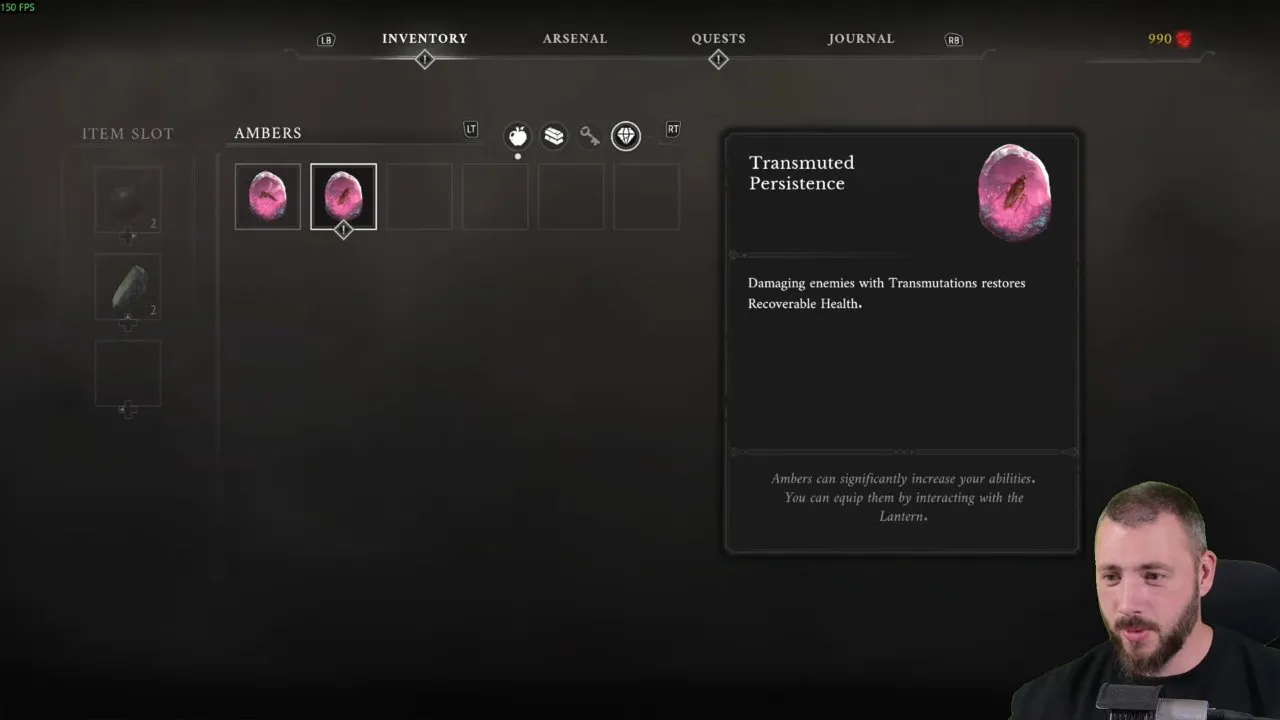
In Inventory → Ambers, the Transmuted Persistence description ties its healing to damaging enemies with Transmutations. It is an Amber you equip, rather than a maximum-health skill point upgrade.
The gray chunk left on your health bar after a hit looks like lost health, but it's recoverable: hit an enemy with a transmutation and it comes back. Your health bar is at the lower left.
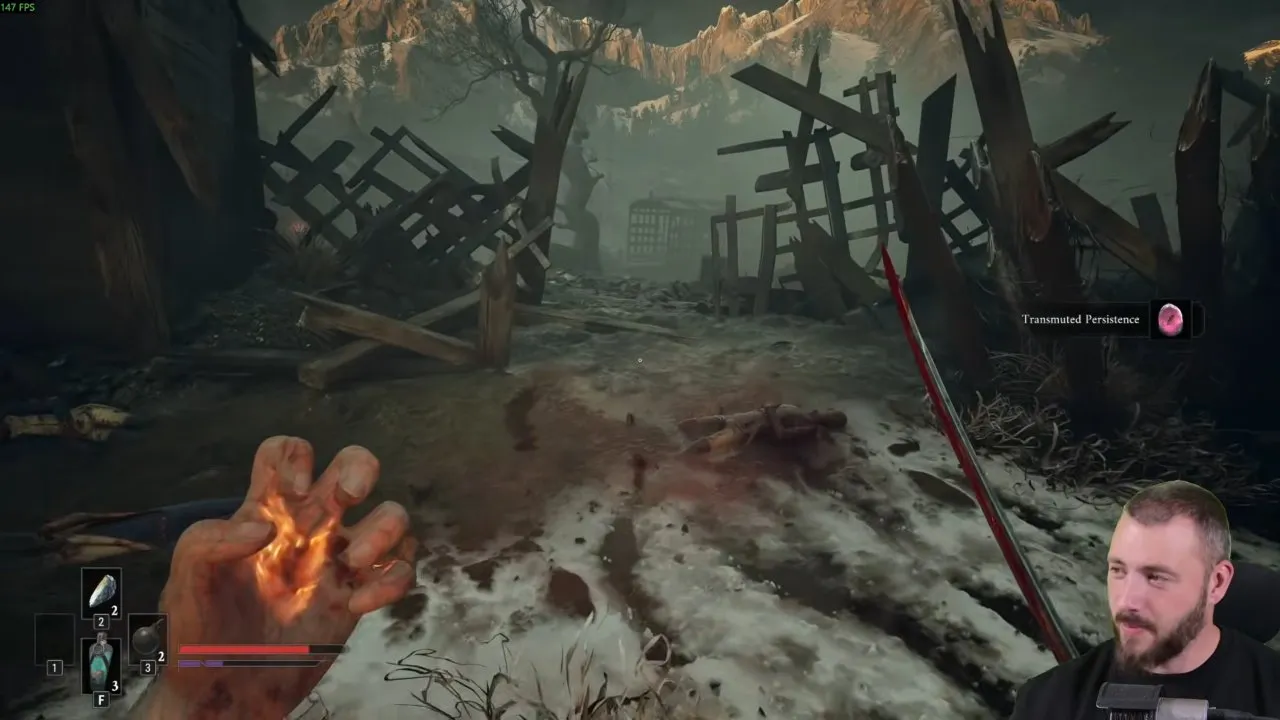
Transmuted Persistence requires you to damage an enemy with a transmutation. The trigger is the damaging hit, so simply casting without connecting does not meet it.
Which Amber should you equip for your Valor Mortis build?
Transmuted Persistence is worth slotting if you hit with transmutations a lot. Otherwise Surplus, which gives more Catalysts per kill, is the easy early pick. The ambers guide shows where each one is and how they compare.
Spend your first points on health and endurance, slot an amber, and head back into the walkthrough. If a fight keeps beating you, rework your points at a lantern while a reset is still cheap.